Common facility infrastructure, design diversification, in-cluster training, documentation and craft revival — delivered inside the cluster, with capability left behind on exit.
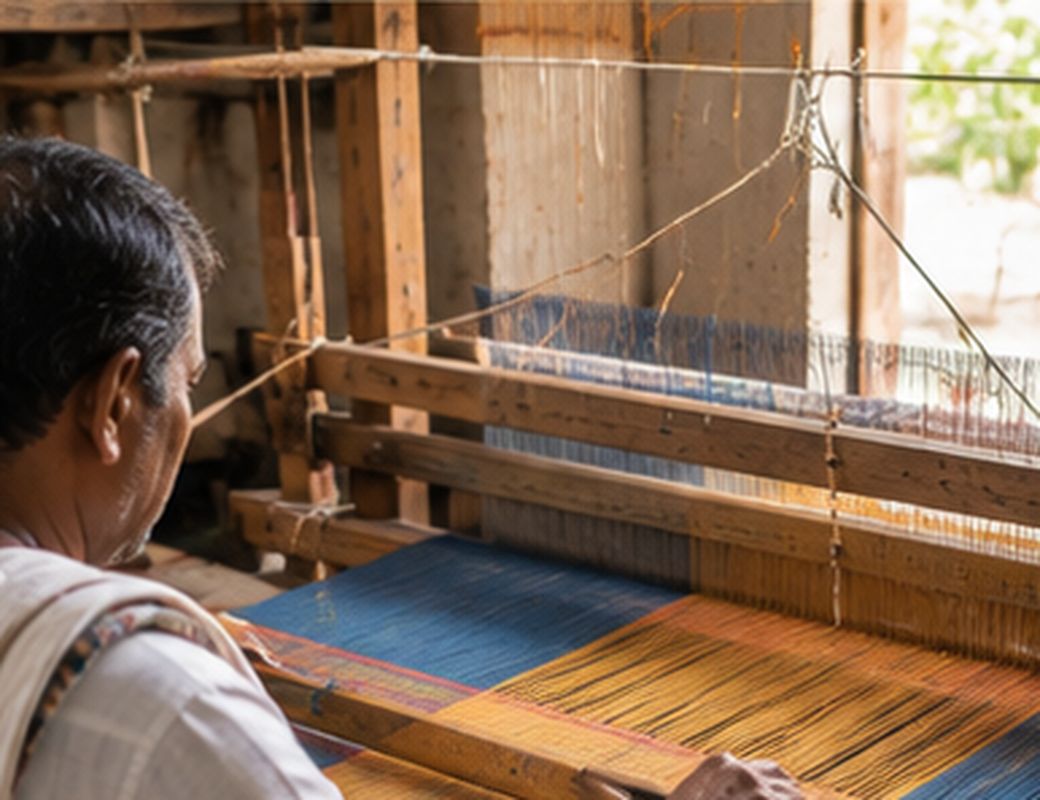
India's handloom and craft clusters face a consistent set of pressures: dependence on a single traditional product, inconsistent quality that blocks institutional and export buyers, no access to shared processing infrastructure, and weavers who cannot cost their own work well enough to negotiate rates.
Cluster interventions are common. Lasting ones are not — facilities fall idle for want of an operating model, designs arrive that weavers cannot execute, and training delivered off-site does not survive the return to the loom.
Croplot works inside the cluster, on the weavers' own equipment, and treats the handover as the point of the engagement rather than its endpoint.
Five service lines, deliverable individually or as a full cluster programme.
Shared dyeing, warping, pre-weaving and testing infrastructure, with operating models built to last.
New product ranges and on-loom design work developed with weavers against real market demand.
In-cluster workshops on loom operation, dyeing, quality, costing and digital literacy.
Systematic recording of techniques, motifs and processes before the knowledge is lost.
Reintroducing lapsed techniques, rebuilding practitioner bases and restoring a viable market.
Production capacity, skill gaps, quality issues and market position assessed on the ground.
In-cluster training on loom, dyeing, quality and costing, on the weavers' own equipment.
Common facilities, design diversification and buyer connection.
Systems, capability and operating models transferred to the producer group.